I used to be goal-driven.
Now I run on a set of identities, and I get more done with less friction.
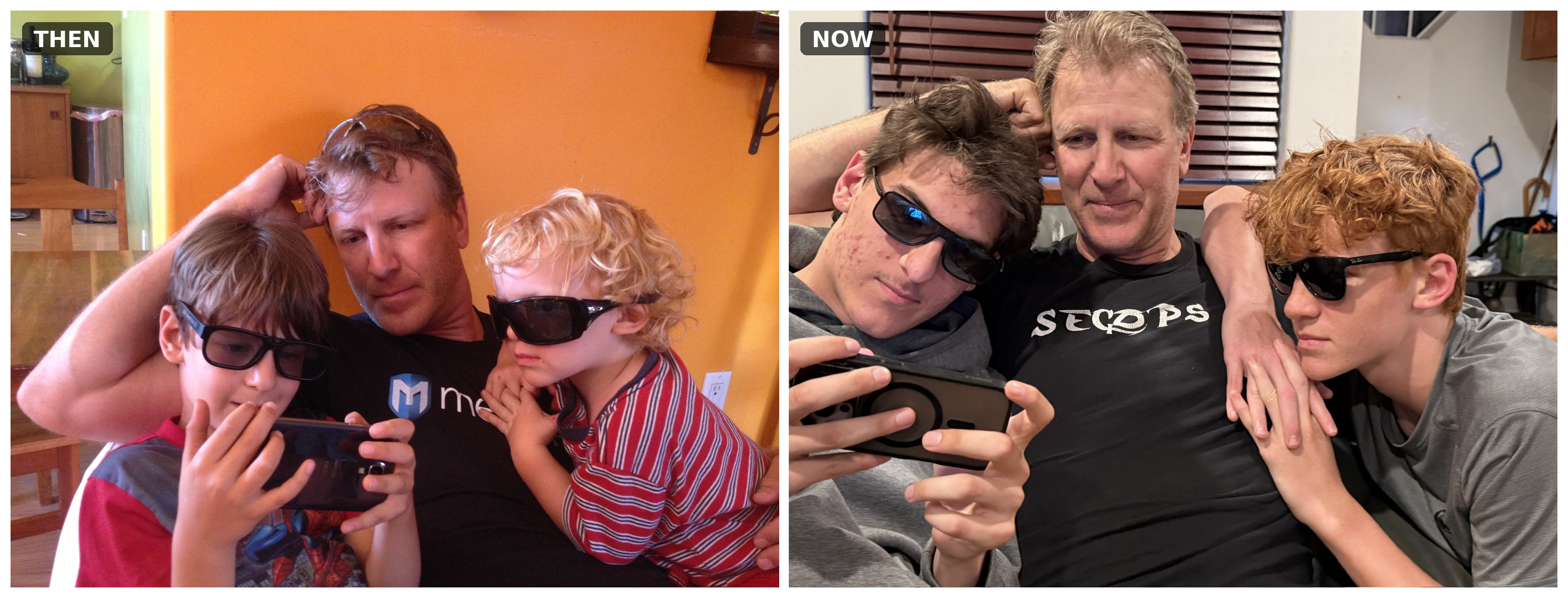
Father's Day was awesome. I got to watch our younger son lead on the volleyball court at a big tournament. Later on that night, we watched fun videos of them when they were toddlers. They wanted to keep watching. They both sat on my lap and kept clicking on new videos.
My identity as a father drives a lot of what I do. I prioritize presence. I model treating people well. I get to model risk-taking and hard work. Fatherhood lets me practice love, set clear expectations, and exercise compassion. All of that carries straight into life and business.
They also get to see me when I break from that identity, like yelling and swearing in LA traffic ( I know, I am not proud of it! )
My boys are 15 and 19. These are some of the last Father's Days where I get real, unhurried time with them.
My other identities help me show up at work, in relationships, and for myself. When I drift from them, the friction nudges me back in line.
I still have goals and deadlines. They just get done through action that fits my identities. No fighting. They feel natural, so they happen.
THE SCIENCE
Motivation research has a concept called identity-based motivation. The core idea is simple. What you do is shaped by who you think you are.
Many of us organize our lives around goals. Run a 5K. Get promoted. Lose 10 pounds. Goals are useful. But once you hit them, the behavior that got you there often stops.
Identity works differently.
Gillman, Stevens, and Bryan (2021) followed 276 inactive women through a 16-week exercise program. Some of them started to see themselves as an exerciser. That shift is what mattered. How much or how hard they trained didn't predict who was still exercising six months later. The growth in their identity did.
It's the difference between "I am a runner" and "Run a 5K by March."
As a behavior becomes part of you, the work of staying with it moves away from deliberate goal-tracking and toward identity and habit. You stop deciding to go for the run. You just go.
The same pattern holds at work. When you see yourself as someone who protects focused time, you protect it. When you see yourself as a leader who guards recovery, you build it into the schedule without reminders. Identity makes the call before willpower ever shows up.
Goals have finish lines. Identities don't.
THE TAKEAWAY
The fastest way to keep a hard behavior going isn't to want it more. It's to become it.
The executive who maintains trusting relationships with their team because that's who they are doesn't need a productivity hack. They just live it.
That's the difference between chasing a goal and building a self. One runs out. The other compounds.
YOUR EDGE THIS WEEK
- Name one identity that fits your best self at work. Not "I want to focus better." Try "I am someone who protects deep work every morning." One statement. First person. Present tense. Write it down.
- Find one small action this week that confirms it. If you're the kind of person who protects recovery, block 30 minutes a day for active recovery. No phone. No news. Nothing to produce. Do it because that's who you are, not because it's a box to check.
- Say it out loud to someone. An identity that gets spoken starts to stick. Tell a colleague, your partner, one of your kids. "I protect my mornings." "I'm someone who doesn't skip." Say what you're becoming, and watch how much easier it gets to become it. Your willpower will be thrilled to finally take the week off.
Be well,
Eric
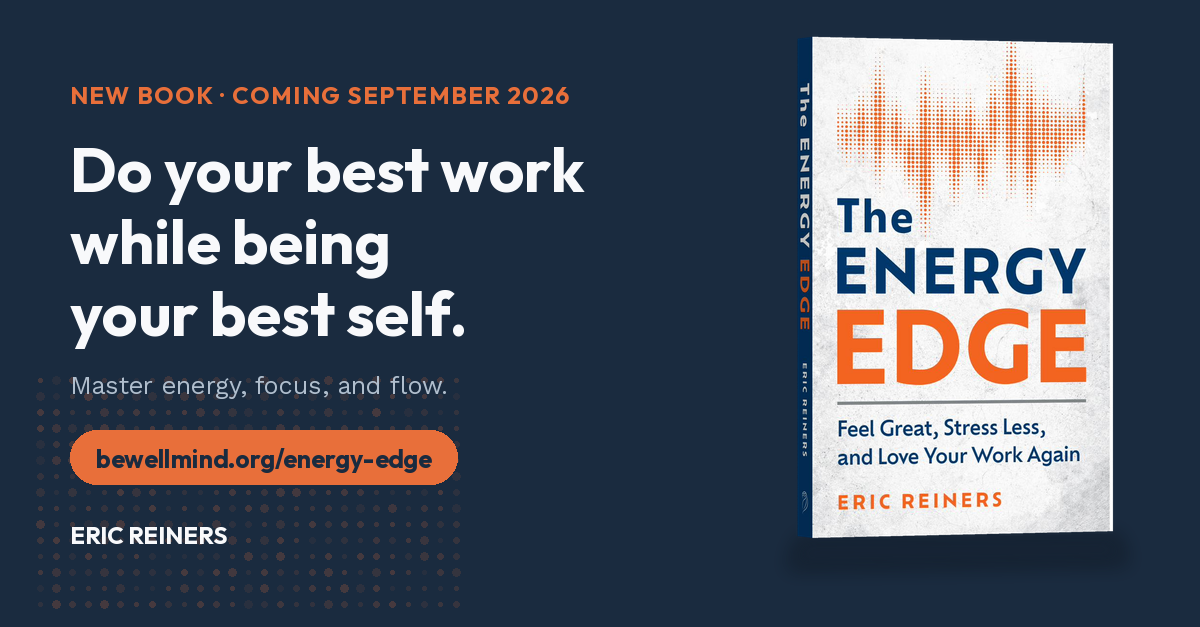
P.S. The Energy Edge book launches in September in paperback, hardcover, and ebook formats (audiobook coming later). Want to be notified when it's ready? Sign up for release updates at https://www.bewellmind.org/energy-edge.

Responses