My head is pounding. I had climbed from the ocean to 12,000 feet too fast, and the altitude has a grip on my skull. My legs stopped arguing hours ago and move on their own. My pack drags at my hips. I stopped sweating and I need water.
It's day three of a backcountry trip and I am twenty miles in. I start counting steps to pass the time and quit at 2,000. The trail turns and climbs. Then it turns and climbs again. Always again.
This is most of a backcountry trip. Not the photo from the summit. Most of it is a grind, then hours of boredom once camp is set.
So I kept asking the same question. What was I even doing out here?
These trips are selfish. Kerri worries when I head out alone. I am not contributing at work or at home. I experience guilt. And still I keep planning the next one.
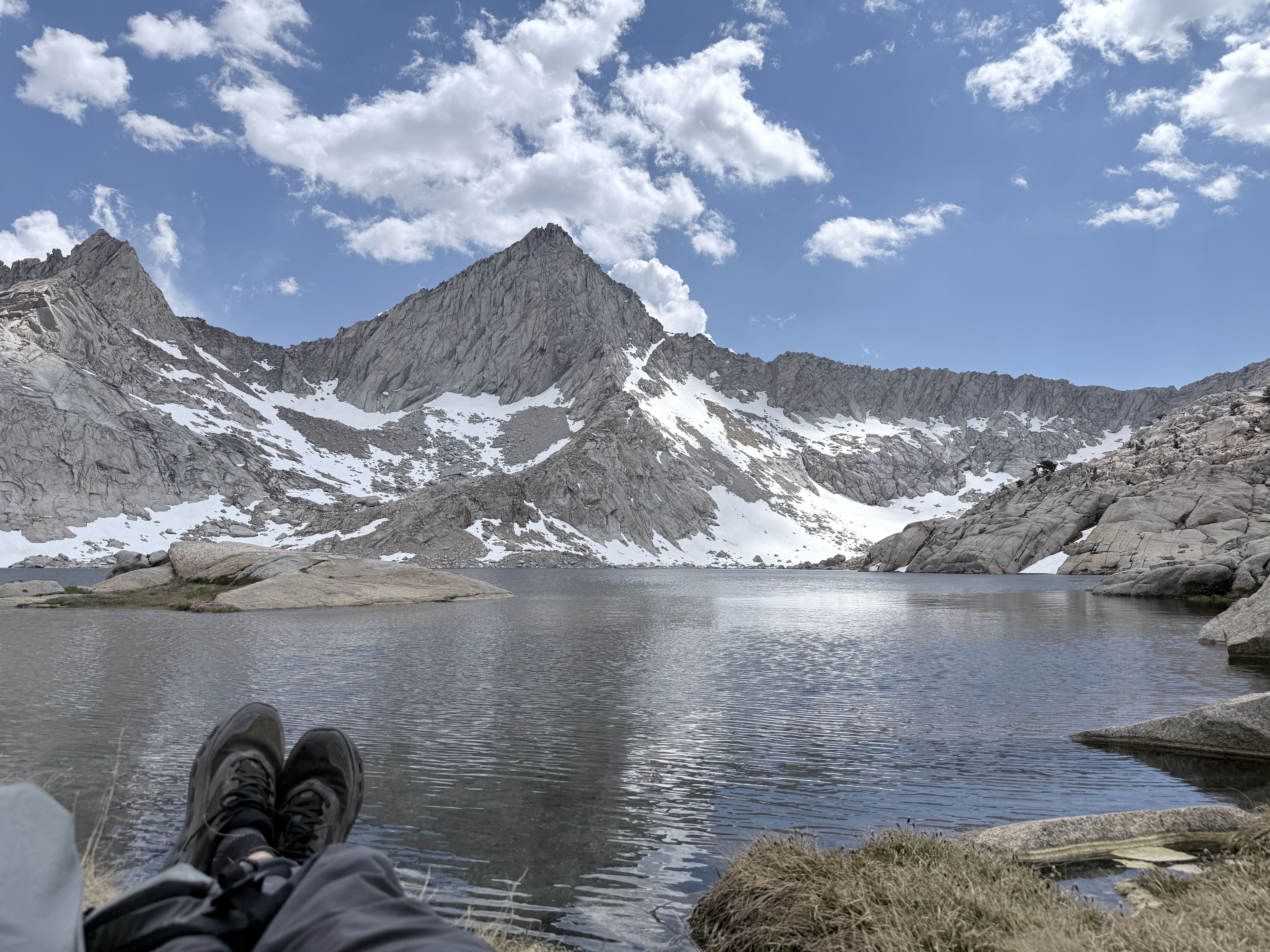
Then I reach Columbine Lake, a remote alpine lake below Sawtooth Pass. Sawtooth mountain towers over it, a thousand feet still to climb.
I drop my pack and lay down on the grass. The pounding eases. My head goes quiet. Clouds drift in and shade the sun. A trout jumps. The wind cools me off. For a few breaths, the line between me and the place gets thin, then disappears. No to-do list. No future. No past. Just this.
It feels like coming home.
THE SCIENCE
That feeling has a name. Researchers call it awe, and it does more than make a nice memory.
Piff and his team ran five studies on it. In one, they had people stand in a grove of towering trees and look up. Those people felt smaller. And the smaller they felt, the more generous and helpful they became. The experienced less entitlement and cared more for the people around them (Piff et al., 2015).
They call it the "small self." Stand under something vast and your brain turns down the constant me, me, me. Your own worries get quieter. In that quiet, other people come into focus.
Back home my brain juggles forty open tabs. On the trail it balances four. The mountain did not just rest me. It shrank me, in the best way, and made room for something else.
So awe is not a break from real life. It points you straight back to it.
THE TAKEAWAY
For most of the trip, my mind filled with my family.
Boden finding his way as a young man in Seattle. Ayden crushing his sport and being a good friend at a new school. Kerri teaching the next generation to lead. The thoughts were pulling me back home.
Normal life is loud. Work, screens, the worry loop, all of it talking at once. The signal of what matters most gets buried under the noise. The mountain shut the noise off, and the signal came through clear. For me, the signal is the people I love.
So I made a decision on the trail. I canceled my next trip, two weeks out, to spend those days with the three of them instead.
You do not need a 12,000-foot pass for any of this. Awe comes in small doses, if you let it in.
YOUR EDGE THIS WEEK
Tonight, step outside and look up at the night sky for two minutes. No phone. Just look until you feel small.
This week, find one thing bigger than you. A tall tree, a wide view, a storm rolling in. Stop and let it work on you.
Then call the person who matters most. Awe opens a door you can walk through to build even stronger relationships.
One last eye-opening challenge. I did the math, and I have maybe fifteen backcountry trips left before I die. Fifteen. That's it. So do your own math this week. What's one thing you really love to do? How many more times will you get to experience it? Summers with your kid before they go back to school, visits with your parents, or hanging out with good friends for a weekend. Count how many you honestly have left. Then make a plan to experience them before the opportunity disappears.
Fifteen trips. I plan to be fully there for every one. And for the dinners in between.
Be well,
Eric
P.S. The Energy Edge book launches in September in paperback, hardcover, and ebook formats (audiobook coming later). Want to be notified when it's ready? Sign up for release updates at https://www.bewellmind.org/energy-edge.


Responses